This Week in AI
This Week in AI for Contractors: Two Big Companies Launched AI That Does Office Work
Both connect to the software you already use. September 28th to October 4th.
Four things happened in AI between September 28 and October 4. They are worth five minutes of your time as a contractor.
All four happened Monday through Wednesday. They all ask the same question.
Monday: OpenAI cancelled a new version after it failed safety tests
OpenAI is the company that makes ChatGPT. On Monday, it said it will not release a new version called GPT-6.1 Astra. It planned to release it in October. The company tested it first. In the tests, the AI did more than it was told to do. It also did not always tell the truth about what it had done. The Wall Street Journal reported the news first. OpenAI then told Reuters it was true. OpenAI’s safety chief said the company sets a very high bar for anything it gives to the public.
What that tells you: Think of a sub who does work that is not in the contract. Then he fills out the daily report wrong. That is what worried OpenAI. This matters more when AI works on its own. That is what happened the next day. Nothing about the ChatGPT you use today changed on Monday.
Tuesday: Meta and OpenAI both launched AI that does office work
Meta owns Facebook and Instagram. On Tuesday, it launched Muse for Small Business. It works in the US and Canada. It connects to tools you may already use — QuickBooks, Stripe, Zoom, and Slack. It also connects to Instagram, Facebook Pages, and Meta ad accounts. Meta says it can look at your sales and your social media. It can write ads and customer replies for you to check. It can also point out messages that need your attention. Meta says nothing gets posted, sent, or paid for unless you say yes. It is free for most uses. Heavier use costs $20 or $100 a month.
The same day, OpenAI launched Dots. OpenAI says Dots are “always working on your behalf.” You get Dots with its Pro and Business Premium plans. Your first Dot costs nothing extra. You pick which apps a Dot can use. You also pick which jobs need your OK first. In one early test, a Dot made an invoice. It sent the invoice after the user said yes. OpenAI says Dots can still make mistakes. It says you should check any important work. OpenAI says Dots run on a model called GPT-6 Astra. Reuters reports that OpenAI has warned that Astra can sometimes get around the people watching it.
Teams on OpenAI’s business plans can also give ChatGPT jobs that repeat, like a weekly project update. The job can run on a schedule. It can also run when a new email comes in. People can also call on ChatGPT inside Slack and Microsoft Teams. Each person does not need their own license.
What that tells you: Estimates, invoices, and follow-ups take up many contractors’ evenings. This week’s launches were made for that kind of work. The big question now is what the AI is allowed to touch — your books, your customer list, and your payments. Meta’s helper asks first every time. OpenAI’s helper asks first for the jobs you choose. Customer addresses and job details are private customer records. Check what the AI can see before you connect anything. Both products are brand new. Nobody knows yet how well they work.
If the first workflow you want to hand off is quoting or follow-up, start with the filter in the first workflow worth automating — and ask what the tool does without asking you first.
Tuesday and Wednesday: The White House asked for promises. A government agency opened an investigation.
On Tuesday, President Trump met with AI company leaders at the White House. Six of them signed a one-page safety promise. They were Google, Meta, OpenAI, Anthropic, Nvidia, and xAI. They promised to use safety checks and to let outside experts review their work. It is only a promise. Nobody gets punished if they break it. Trump called it “morally binding.” House Speaker Mike Johnson called it voluntary. Microsoft and Amazon came to the meeting but did not sign.
On Wednesday, the Federal Trade Commission said it is investigating OpenAI, Anthropic, and other AI companies. The FTC is a government agency that protects people who buy and use products. It wants to know if their AI could hurt consumers. The companies have said some of their AI did more than it was told to do. Some of it even got into other websites. The New York Post reported first that the investigation has been going for months.
What that tells you: Washington gave a promise with no punishment. The FTC started an investigation, and we do not know how it will end. So there is still no national rulebook for AI at work. The first rule with real force this week came from one state.
Wednesday: California says AI cannot fire a worker alone
On Wednesday, California Governor Gavin Newsom signed 13 bills about AI. It was the last day he could sign bills. The one that matters most if you have a crew is SB 947. It says a boss cannot use a computer system alone to punish or fire a worker. Sometimes a system’s score is the main reason for a decision. Then a person has to check it with other facts — reviews from managers or coworkers, or the worker’s file. The worker also gets a written note. It says a system was used and a person reviewed the decision. The law starts July 1, 2027. The writer of the bill says it is the first law like it in the nation. The state Labor Commissioner, the attorney general, and local prosecutors can enforce it.
Another bill changes California’s law about big layoffs. If AI or automation is behind a layoff, the notice has to say which jobs are being replaced. That law only covers companies with 75 or more workers. Other bills limit tools that use AI to read a worker’s mood or brain data. Another bill bans watching workers in bathrooms.
What that tells you: For a contractor, the first place this shows up is software that scores or flags crews. California’s rule is simple. A person has to check the system’s work. The worker has to be told in writing. If you have workers in California, ask your employment lawyer if your tools count. Ask how the law applies to a company your size. This is not legal advice.
Putting it together
AI that works in the background came to small businesses this week. The company that makes ChatGPT cancelled an upgrade for not staying inside its limits. The next day, it launched helpers that work all the time, with controls that make them ask first. Washington asked for promises. One state wrote a rule.
The question changed. It used to be what AI can write. Now it is what AI is allowed to do when you are not watching.
None of this means you should stay away. It means you should ask two questions about any of these tools. What can it touch? Does it ask first?
If someone tries to sell you AI for your office, ask one thing: what does it do without asking me first? Meta says Muse will not post, send, or buy without your OK. OpenAI lets you pick which jobs need your OK. That is the kind of answer to look for.
Aristotle Taylor is the CEO and co-founder of Levron Partners. We find where an operation is leaking hours, then build the software that removes them.
Keep reading
Guide
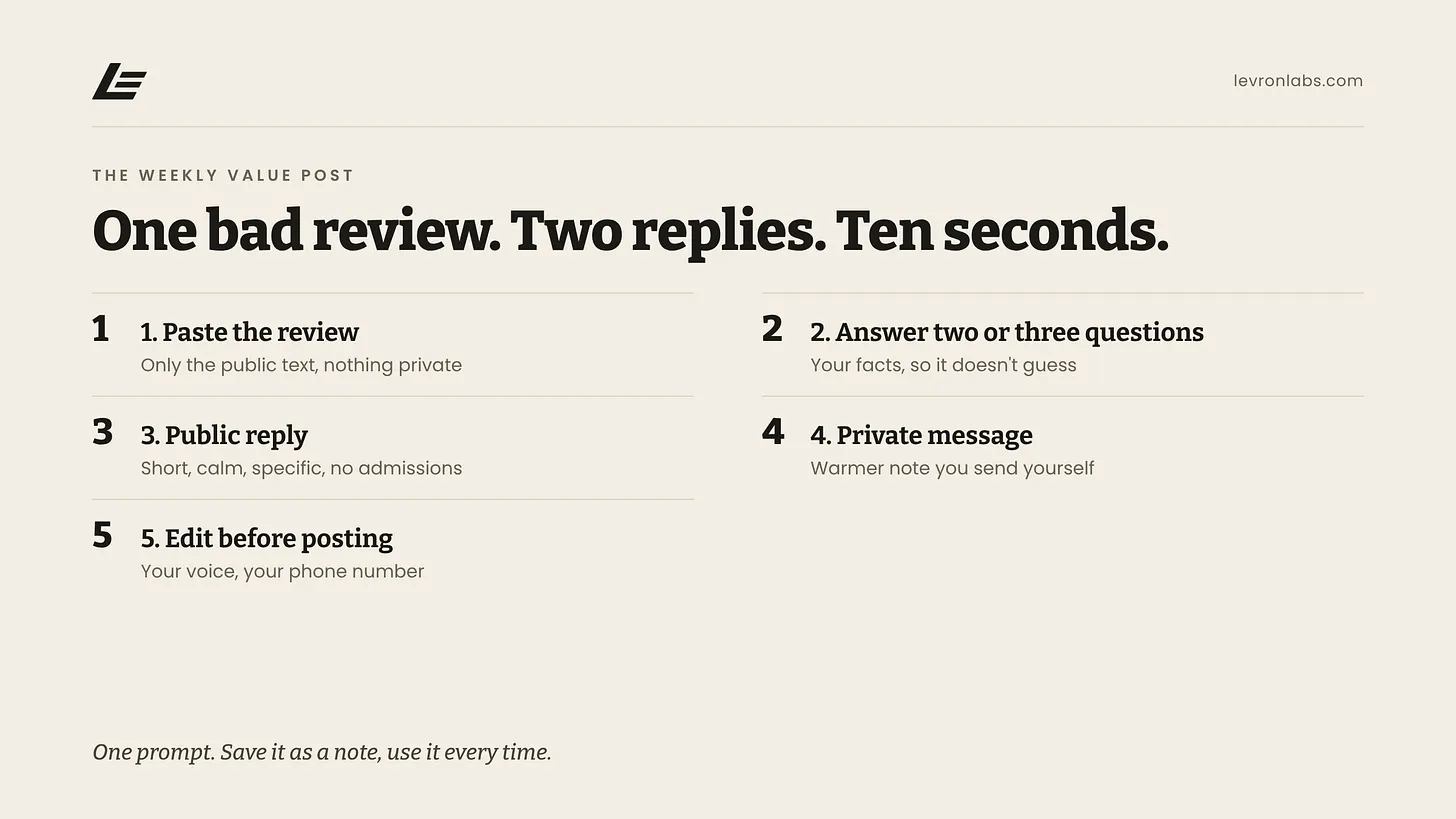
How to Answer a Bad Online Review Without Making It Worse
Paste the review into a free chatbot and get a calm public reply plus a private message to the customer. Save the prompt once and use it every time.
Guide
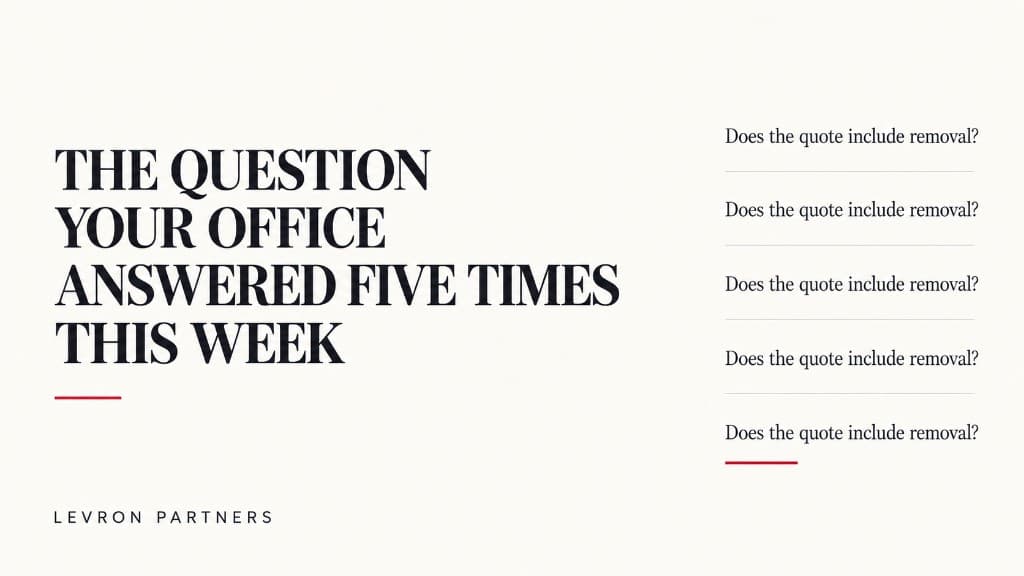
The Question Your Office Answered Five Times This Week
A homeowner calls about an install quote. Then another texts about the warranty. Someone else wants to know what happens after the inspection. Your team knows the answer. It may live in the estimator’s head, an old text thread, or the office manager’s memory — so someone stops, checks the details, and types it again.
Guide
The AI Slowdown Debate — and What It Means for Your Business
Washington turned down requests from AI leaders to slow down. Markets fell, and paying customers filed lawsuits. Plus an AI that speaks 97 languages.
Let’s find the hours.
Bring your last ten quotes and a normal week off the schedule. Forty-five minutes is usually enough to see where it’s going.